Marketing Strategies for Promoting a Business Opportunity
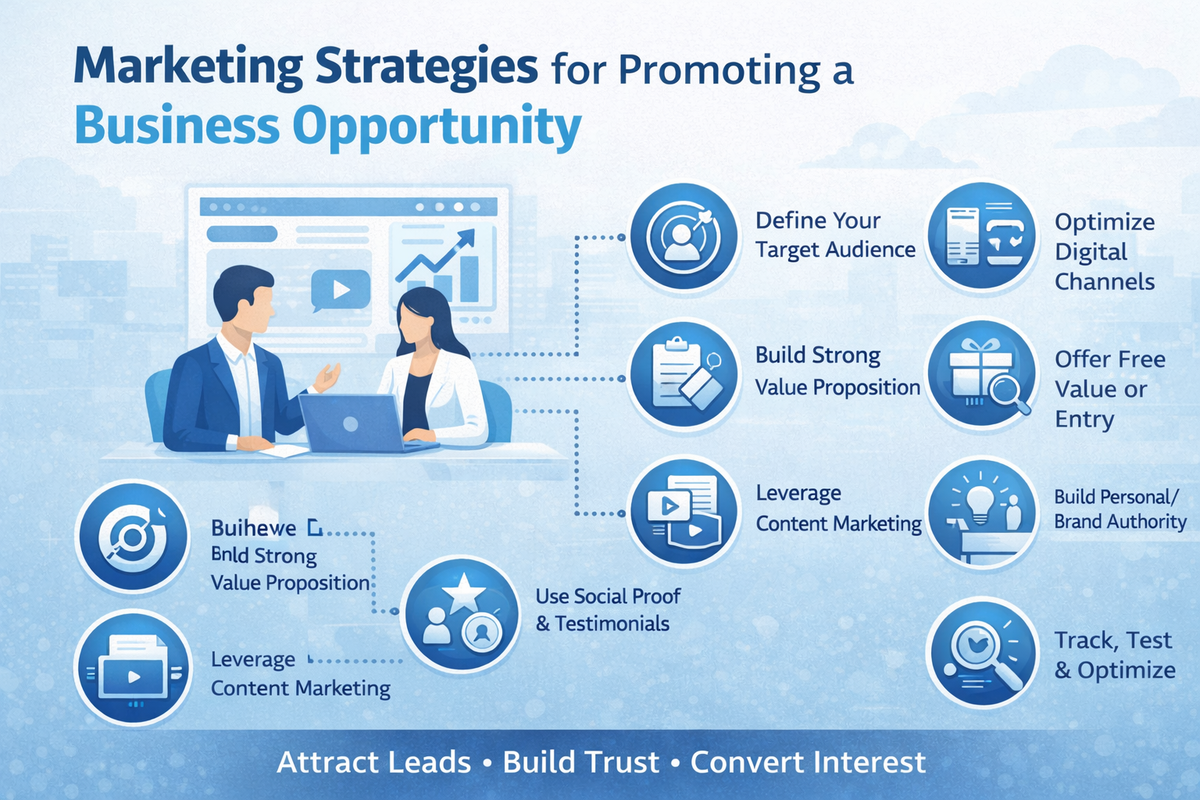
Promoting a business opportunity effectively requires more than just a great product or concept. In today’s competitive and digital-first market, success depends on clear positioning, trust-building, and the ability to reach the right audience with the right message. Below are proven marketing strategies that can help you attract leads, build credibility, and convert interest into action.
1. Clearly Define Your Target Audience
Before launching any marketing effort, you must understand who your ideal customer is. Different business opportunities appeal to different audiences - entrepreneurs, investors, freelancers, or beginners.
Ask key questions:
- What problems does this opportunity solve?
- What level of experience does your audience have?
- What motivates them - income, freedom, scalability, or innovation?
Clear audience definition allows you to tailor messaging, platforms, and offers more effectively.
2. Build a Strong Value Proposition
A business opportunity must clearly answer one question: Why should someone choose this over alternatives?
Your value proposition should highlight:
- Unique benefits
- Competitive advantages
- Expected outcomes
- Low risk or high potential (when applicable)
Avoid vague promises. Be specific, realistic, and results-oriented.
3. Leverage Content Marketing
Content marketing is one of the most effective ways to promote a business opportunity while building trust.
Effective content formats include:
- Blog articles and guides
- Case studies and success stories
- Educational videos and webinars
- Social media posts and short-form content
Focus on educating first, selling second. When people understand the opportunity, they are more likely to engage.
4. Use Social Proof and Testimonials
Trust is critical when promoting a business opportunity. Social proof reduces skepticism and builds credibility.
Use:
- Customer testimonials
- Reviews and ratings
- Real success stories
- User-generated content
Whenever possible, include names, photos, or data to increase authenticity.
5. Optimize for Digital Channels
Your online presence is often the first point of contact. Make sure it is professional and conversion focused.
Key elements:
- A clear landing page with a strong call-to-action
- SEO optimization for relevant keywords
- Email marketing funnels
- Paid ads (Google, Meta, LinkedIn) for scalable reach
Consistency across all channels reinforces brand trust.
6. Offer Free Value or Entry Points
Lower the barrier to entry by offering something valuable upfront.
Examples include:
- Free trials or demos
- E-books or reports
- Webinars or workshops
- Free consultations
This strategy allows prospects to experience value before making a commitment.
7. Build a Personal or Brand Authority
People follow opportunities they trust and trust comes from authority.
You can build authority by:
- Sharing insights and expertise regularly
- Speaking at events or podcasts
- Publishing thought leadership content
- Engaging consistently with your audience
Whether personal or brand-driven, authority positions you as a reliable source.
8. Track, Test, and Optimize
Effective marketing is data driven. Monitor performance and adjust strategies based on results.
Track:
- Conversion rates
- Cost per lead
- Engagement metrics
- Customer acquisition channels
Continuous testing and optimization help you scale what works and eliminate what doesn’t.
Marketing a business opportunity successfully requires a combination of clarity, credibility, and consistent execution. By understanding your audience, delivering real value, leveraging digital tools, and building trust over time, you can turn interest into long-term growth.
The most successful promotions don’t rely on hype they focus on education, transparency, and real results.